
"Mother of All Deals"
The Global Realignment: India and Europe Shake Hands While US Tensions Mount
GEOPOLITICS
Raj Sing
1/25/20263 min read
My post content
The global chessboard is shifting rapidly this week. While the United States leans heavily into "tariff diplomacy" and military posturing, a historic realignment is taking place between India and Europe. From the "mother of all deals" in New Delhi to the viral "sad horse" of China, here is your briefing on the stories reshaping our world.
1. The "Mother of All Deals": India and the EU
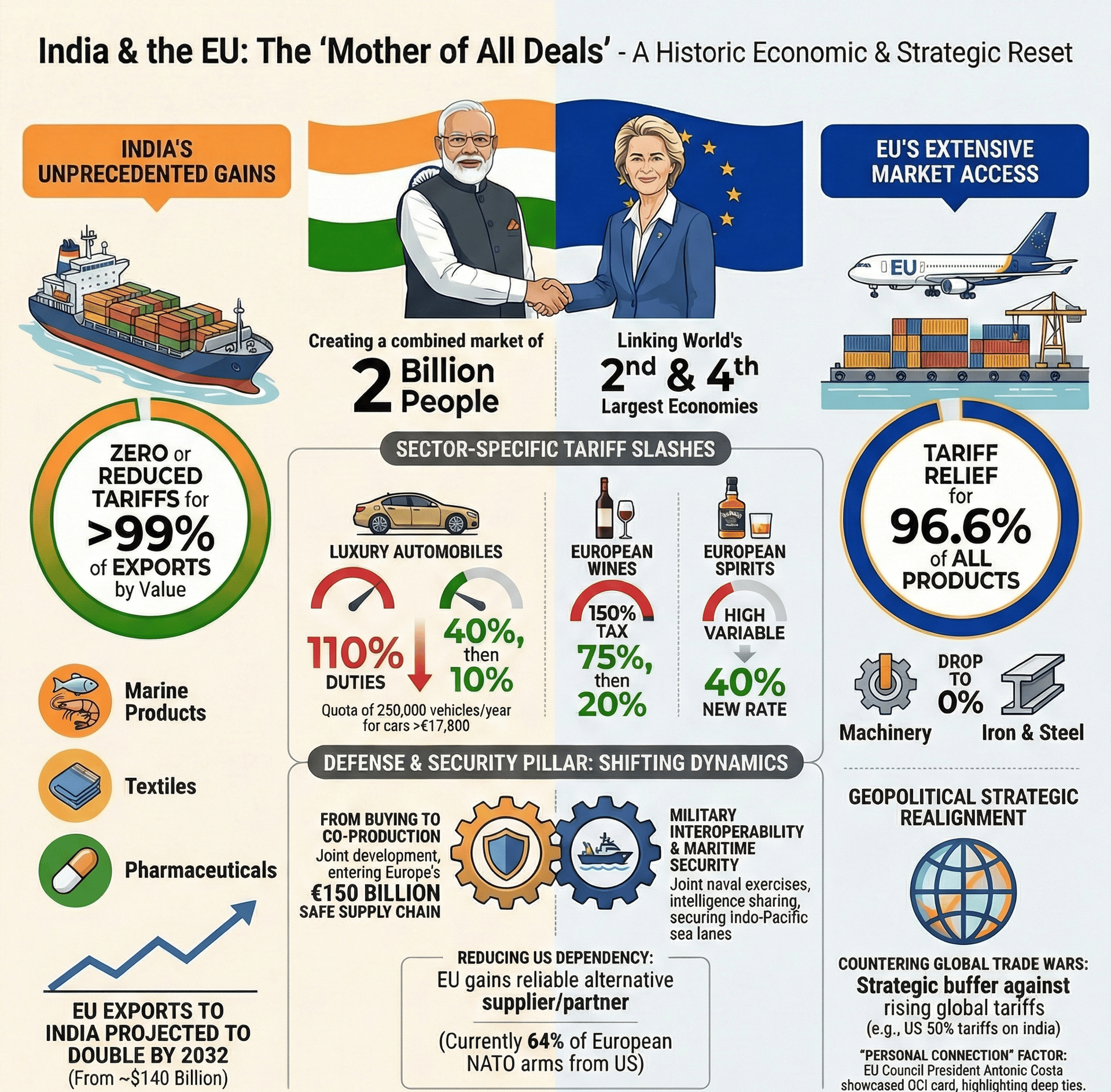
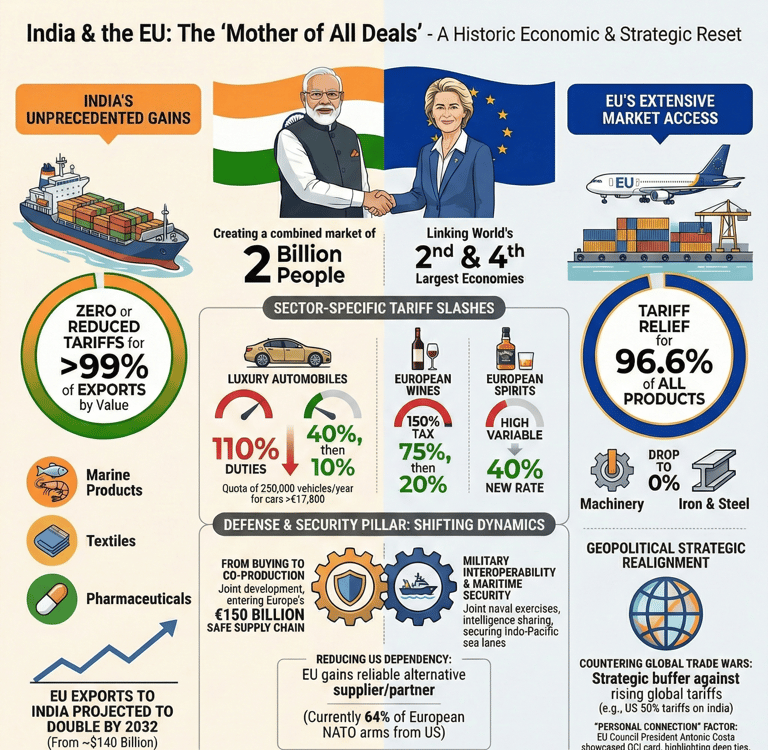
In a move described by Prime Minister Modi as the "mother of all deals," India and the European Union have finalised a dual agreement covering both trade and strategic defence. This partnership creates a combined market of two billion people, linking the world's second and fourth-largest economies.
The Economic Win-Win:
• For India: New Delhi has secured unprecedented access, with zero or reduced tariffs on 99% of Indian exports by value, boosting sectors like textiles, leather, and pharmaceuticals.
• For Europe: India will slash import duties on European wines (from 150% to an eventual 20%) and luxury cars. Currently taxed at up to 110%, duties on European automobiles will drop to 10%—but only for luxury vehicles costing over €17,800 (approx. 17 lakh rupees) to protect India's domestic mass-market manufacturers.
• The Goal: The EU expects its exports to India to double by 2032, reaching approximately $140 billion.
The Defence Pivot: Crucially, this deal is also about security. Moving beyond a simple buyer-seller relationship, India and the EU have signed a pact for co-development and co-production of defence equipment, allowing Indian firms to enter European supply chains. The pact also focuses on maritime security to monitor sea lanes, a clear signal of shared concerns regarding Chinese naval assertiveness in the Indo-Pacific.
2. The US Weaponises Trade and Deployment
While Brussels and New Delhi build bridges, Washington is raising walls. President Trump is increasingly using tariffs not just to balance trade, but to force political compliance.
• South Korea: Trump has threatened to raise tariffs on South Korean goods from 15% to 25%, punishing Seoul for delays in legislative approval of a previous trade deal. This follows similar threats against Canada and European allies, signaling that even close partners are not safe from the "tariff hammer."
• The Iran Standoff: Tensions in West Asia are at a boiling point. Following mass protests in Iran, the US has deployed a "big armada," including the nuclear-powered USS Abraham Lincoln,. Tehran has responded with defiance, erecting a billboard in the capital depicting a destroyed US carrier with the ominous warning: "If you sow the wind, you will reap the whirlwind."
3. The Push for "Tech Sovereignty"
A quiet rebellion is brewing against the dominance of American Big Tech. Nations are realising that digital dependence is a strategic vulnerability.
• France is building a "digital resilience index" and developing its own video conferencing tools to ensure government data remains under French law rather than sitting on US servers.
• India echoes this, arguing for control over the "rails" of the digital economy. The argument is that India’s massive data generation should fuel its own AI and economic growth rather than being harvested by foreign tech giants.
4. Society and Labour: Bans and Burnout
Significant social shifts are redefining how the world works and plays.
• Banning Social Media for Kids: A global movement is gaining traction to restrict social media access for minors to curb addiction and bullying. Australia has proposed a ban for under-16s, and France has voted to bar children under 15, with President Macron declaring that children's brains are "not for sale" to American or Chinese networks,.
• Germany’s Part-Time Debate: Facing a labour shortage, Germany's ruling CDU party is proposing a ban on the legal right to "lifestyle part-time work." Critics argue this will disproportionately harm women, who make up 75% of the part-time workforce, by ignoring the reality of caregiving duties,.
5. The "Sad Horse" of China
Finally, a viral trend from China offers a poignant look at modern burnout. A manufacturing error resulted in a plush red horse toy being sewn with a drooping, sad mouth instead of a smile.
Rather than being rejected, the "defeated" horse has become a sensation among young Chinese workers grappling with the gruelling "996" work culture (9 am to 9 pm, 6 days a week). They are buying the toy as a symbol of solidarity, finding comfort in a festive object that looks as exhausted as they feel,.